Showing posts with label Book Review. Show all posts

3.28.2014

She's My Soft-Touch Typewriter


Franklin Bruno's book for 33 1/3  has struck a really interesting way to write about music. It's an abecedary of Armed Forces' song titles, motifs, themes, important figures in 20th century fascism, etc., with only passing regard to Elvis Costello's private life (beyond those things that illuminate or problematize items listed above). By organizing the book alphabetically by key terms, Bruno can deal with the album's themes of militarism and imperialism in both the political and personal arenas in a way that connects by inference and foregrounding and callback. The album itself isn't Costello's best, and may not even make it into my All Time Favorite Desert Island Costello list, but it's probably the most worth examination and consideration in exactly the way Bruno goes about it. 

Really the only aspect of Costello's personal life that plays a part in this book has to do with an ugly argument with Bonnie Bramlett and the Stephen Stills Band in a hotel bar in Columbus, OH, in 1979.  Costello says things in this altercation that, whatever the motivation (i.e., trying to irritate Bonnie Bramlett) and how great the intoxication, are pretty unforgivable.  (Although apparently his targets, James Brown and Ray Charles, did, or sort of did, forgive him.)  Bruno's concern is only how that complicates, underscores, and cross-cuts Costello's aim on this album to twin interpersonal behavior with imperial and impersonal state actions, particular in regard to Costello's own connection to black American beat music.

I've not read much of the 33 1/3 books but this was far different from the "fan's notes" I was expecting -- it's hard (and probably beside the point) to even detect whether Bruno even cares for Costello's record all that much, except as a kind of text to be read against its author's concerns.   If more of these 33 1/3 books approach their subjects in this sort of lit-crit way, rather than in a "How They Made It" or "What the Lyrics Mean" fashion, count me in.  I'm looking towards Lethem's book on Fear of Music, or maybe the one covering Paul's Boutique.

9.12.2013

A Jumped-Up Pantry Boy Who Never Knew His Place


If an auto-biography involves a tale that is at least partially based on the writer's own life, I'm going to coin auto-bibliography as a tale that informs the reader about his or her own experiences.  Maybe often we say we "identify" with a character, but I think that's usually kind of froth of empathy and character motivation that parses to readers as sensible and real.  But these are books that I identified with in a more personal way -- I saw myself in them.   I mean -- if I can paraphrase Morrissey --  they something to me about my life.

2. Five Auto-Bibliographical Novels


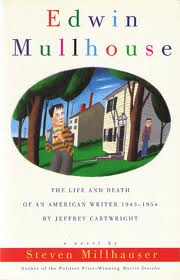
Steven Millhauser, Edwin Mullhouse: The Life and Death of an American Writer, 1943-1954 by Jeffery Cartwright.  A close read of the title gives it away, but this is a faux-biography of a ten-year-old novelist by his eleven-year-old best friend and biographer.  The appeal is an incredibly detailed chronicle of childhood imagination, in such a way that vividly captures the spirit of play.  For me, at the time I read it, it led to treasure trove of recovered memories -- the non-traumatic sort. (The conceit, spoiler alert, is that the genius artiste Edwin is really no different than any other particular boy who fascinates over comics and spaceships and toys.)

Jonathan Lethem, The Fortress of Solitude.  Again, here is the exactness of the tween/teen years that resonates, in a novel that uses superhero powers as a metaphor in all kinds of cross-wired ways.  I explained some of what I love about this book here (in a post whose title also quotes Morrissey -- I may be more of a Smiths fan than I thought I was).  While I was reading this book, I wanted only to be reading this book.  Not because it's particularly suspenseful or compelling in its plot, but because I really felt at home in reading it.  I did not grow up in Brooklyn, my father was neither a painter nor a soul singer, and these characters would have been a few years older than me, and yet I more closely identified with this book than any other I've ever read.  

Colson Whithead's Sag Harbor is  The Fortress of Solitude on summer vacation. In a way that Lethem captures late 70's/early 80's teenagerdom, Whithead does the same for mid- to late-80's summer vacation on Long Island.  He covers the rise of the waffle cone, the summer of Lisa Lisa and Cult Jam, when everyone said "dag."  There's also, here, a whiff of the teenaged fear/suspicion of dads -- one's one, others -- that resonated for me.


David Shields, Dead Languages.  Another novel about a teenaged middle-class boy, this one with a stuttering problem and journalist parents.  It's been a long time since I'd read this, but feeling pangs of identification with it.

Sam LipsyteThe Ask.  At the start of this book, its point-of-view character has a bureaucratic job with a third-tier university.  It's a very funny book, particularly the daycare-in-a-minivan bit involving The Passion of the Christ.

Extra non-novel bonus: Sam Lipsyte, "The Dungeon Master," The Fun Parts.  A short story that recalls for me the Weir's Downer Avenue basement, playing D&D -- a game designed for 5-7 role players -- with one other person, with the game being far more about story-telling and problem-solving than dice roles and dwarf vs. beholder melee.

9.10.2013

There's Money In New Wave

A friend -- my oldest friend, in fact -- asked me via text message to send him a list of the 50 books that have most influenced me.  I like a good challenge, and I'm game to talk about good books, so I'm going to make use of this space to do it.  In chunks, thematically linked, over the next ten posts -- and with the caveat that influences wax and wane (as do obsessions, phases of the moon, and/or friendships) so this may be biased towards the now.  (Raymond Carver, for example, was a huge influence on how I wrote stories in pre- and early graduate school, but he doesn't hold much sway on me any longer.  I guess we'll see if he makes the fifty.)

So: this is for Rob Weir. Feel free to eavesdrop.

1. Five Books that Merge the Fiction and History

All five of these books sprawl without necessarily being long-- multiple characters and points of view, "plots" (such as there are any) covering long periods, connections drawn or suggested between disparate situations.  None of these books would rightly be called "historical fiction," but yet they all are tethered in certain ways to events and people we'd recognize as having actually existed.  These books appeal not because there are "real historical figures" in them, but because the merging of what we think of as "real" with fiction infuses mystery into what we think we know.  Each of these books suggest some kind of invisible layer of meaning, some unknown connective thread, between what is real and what isn't, between what we know and who we are.  Maybe when faced with the unknown or the insensible, we create meaning.

Jake Arnott's The House of Rumour is a fantastic novel, and it's a crying shame you haven't heard about it.  It shares the literary DNA of David Mitchell's Cloud Atlas and Jennifer Egan's A Visit from the Goon Squad. In 22 chapters mapped on to the arcana of the tarot deck, Arnott links together a secret history of the 20th century.  Actual historical figures interact with fictional characters, and different literary styles infect particular chapters.  Ian Fleming appears as a point-of-view character, as does a character that could be a stand-in for George Michael (the pop star, not the founder of FakeBlock).  As in Infinite Jest, the plot -- such as there is one -- concerns a mysterious and important document related to Rudolph Hess' strange 1941 peace mission to Scotland.

E. L. Doctorow, Ragtime. Race relations in the early 20th century, written with a cool kind of distance.  Houdini, Freud, J.P. Morgan, Henry Ford, Stanford White.  Doctorow said, "I'd never read that J.P. Morgan and Henry Ford met. But for me their meeting was unavoidable ... So have they met? They have now." 

Don DeLillo, Underworld.  The long prologue first appeared a novella in a 1992 issue of  Harper's Magazine as "Pafko at the Wall."  At that time, Harper's Magazine used a different paper stock -- less shiny, thicker -- for the long-read folios in their magazine, paper that was gravid to the touch. I may have read this in the Cafe Demi.  In it, Frank Sinatra, J. Edgar Hoover, Jackie Gleason, and NYC restauranteur Toots Shor watch the Giants play the Dodgers at the Polo Grounds in 1951.  The baseball from that game ("Giants Win the Pennant!  Giants Win the Pennant!") carries through the rest of the book -- a talisman like the Hess documents in House of Rumor, the videotape in Infinite Jest, or...

...the desiccated penis removed from Napoleon's corpse in John Vernon's Peter Doyle, a book which is sadly out of print.  I wrote about Peter Doyle here a few years back.  (I'd also put Peter Doyle on a list of books that seemed to promise a sequel that is yet to arrive, along with Peter Carey's The Unusual Life of Tristan Smith and Susanna Clarke's Jonathan Strange & Mr. Norrell.)

Brooks Hansen, The Chess Garden.  This novel involves letters sent home to Dayton, Ohio, by an elderly doctor assisting in a refugee camp in South Africa during the Boer War.  The letters themselves become a kind of fable, though the "real" world the novel sets up includes a young Paul Lawrence Dunbar.  There's a bit with a horse stuck in an attic during the Dayton flood.  The horse is named Cow.  It's fun and sad and weird in the right sort of balance.

6.14.2013

Short People Got No Reason

Andrew Solomon's Far From The Tree is a project.  It is work.  It's a hefty book in hardcover, and it demands and deserves acuity from its readers.  Mostly, that work feels rewarding, but it also feels like work.  Many episodes with that book ended with clapping its cover down, sighing like a hard day had ended, swearing at its relentless punches at one's facility for empathy.

The introduction sets out a thesis on parents dealing with children they might not expect -- children with disabilities, gifts, mental illnesses.  Solomon grants these children "horizontal identities," whereby they fit or identify more with others (even strangers) than the families, ancestry, social groups in which they have "vertical" identity.  This carries into early chapters on the politics of deafness and dwarfism, areas that split over adherence to or an identity apart from the mainstream.  Through surgery or DNA testing, modern medicine can "correct" or even (through eugenics) eliminate such populations, and Solomon argues with a great charity of humanity about why this is a dangerous and threatening idea.

Middle chapters break away somewhat to deal with families with greater issues, and the family stories in these chapters seem to get increasingly bleak to the point where one has to take regular breaks to hug one's own children, thankful that as tenuous or difficult as they can sometimes be, they are still a far lighter burden than some parents face.  I found myself looking forward to the incongruous chapter on musical prodigies, figuring it would be a break from all the dire and the sad, but even there one finds tragic stories and broken lives.

It's also about that point in the book where attention turns from genetic conditions discovered at birth or early on to illnesses and behaviors that first manifest in later childhood or adolescence, which brings in a whole 'nother level of fraught anxieties.

What's important about Far From The Tree, despite or because of the work it demands, is how it reframes thinking about the types of children Solomon discusses and the need for parents, medical and mental health practitioners (and particularly ob/gyn and pediatric doctors), and all of the kinds of people who have operating hearts to deal more deeply with these children as persons, as beings with lives worth our time and our critical faculties and our work.

7.28.2010

You're Invisible Now You've Got No Secrets to Conceal

David Mitchell -- The Thousand Autumns of Jacob De Zoet. Mitchell's Cloud Atlas was such a great book that this new novel seems like a follow-up, despite his Black Swan Green falling between the two. There's so much to like about Mitchell, chiefly the forcefulness of his imagination and the fluidity of his writing. The setting here, of a Dutch trading post in late 18th/early 19th century Japan, feels and reads more like science fiction than history, and the complex system of trading commerce (as well as the ruses that prey on or subvert it) is strangely and delightfully interesting to see unfold. For fresh dialogue and characters, I don't know if there's anyone better out there writing in English.

I wouldn't necessarily put this book on a reading list above either Cloud Atlas or Black Swan Green, largely due to the somewhat far-fetched unspeakable secret at the heart of the monastery that is the focus of the too-long middle section of the book, but I found the first and later sections completely absorbing. It seems David Mitchell is like pizza -- even when it isn't perfect, it's still pretty good.

------

Michael Chabon -- The Final Solution. This is a short novel -- I do not cotton to the word "novella" -- set in England during the Second World War, and featuring the last case (or a last case, anyway) of a certain world-famous Victorian detective. Unnamed in the text, and so unnamed here, this particular bee-keeping retiree would have been at least in his very upper eighties at the time this story takes place, and Chabon paints this character with the aches and resignations of age and faded glory.


The central mystery revolves around sequences of German numbers recited by the parrot on the cover there, with certain nefarious folks speculating that this may be German army codes or account numbers to Swiss banks. Neither the detective or any of the other characters ever make out what the numbers actually refer to, but the answer can be pretty well sussed by the book's title. It's a well-done period pastiche, not nearly as weighty as its subject matter, and the juxtaposition of the sharp deduction skills and quaint Victoriana of the detective against the named and unnamed horrors of WWII is handled well and subtly.

------

Steven Amsterdam -- Things We Didn't See Coming. Mid-way through reading this collection of closely linked short stories, I mentioned to a few people that it could be thought of mathematically as Denis Johnson's Jesus' Son + Cormac McCarthy's The Road. The later stories in the book, however, cause me to temper that analogy; it needs to be divided by something, because "plus" perhaps suggests a level of quality of the two other books that Things We Didn't See Coming doesn't quite attain. So maybe its better represented as (Jesus' Son + The Road)/The Bachman Books.

At any rate, this is a set of stories from the point of view of one particular character who traverses from contemporary America into an ever-increasingly grim dystopia. The first story is set on New Year's Eve 1999 and concerns the narrator's fathers concern and preparation regarding Y2K, which may seem like distant and unattended fears to us but lead into the disasters (floods, draught, urban collapse, eco-terrorism, widespread cancer) of later stories. The second story, in which the right cocktail of pills brings a non-responsive Alzheimer's patient back to brief but vibrant life, is particularly affecting.

Jesus' Son is a clear model, as each story reflects but does not necessarily refer to the others, and the stories try to balance emotional distance or disengagement from events with a more generous and heartfelt response to humanity. Amsterdam's final story reaches for but doesn't quite attain the sense of possisble redemption that makes Jesus' Son's final story such a beautiful heartbreaker, but its a noble attempt. Overall (excepting one middle-of-the-book story concerning a sexed-up foxy senator of the future) a fun and diverting read.

------

Greil Marcus -- Like a Rolling Stone: Bob Dylan at the Crossroads. I have a complicated reader-author relationship with Greil Marcus. He's clearly really smart, in a culturally-plugged-in kind-of-way, and he seems to find important a lot of the stuff I find important, but sometimes he comes off as a little bit snooty or a bit inside-baseball, someone who's liable to tell you that the best of all possible Bob Dylan performances can be found on a bootleg tape inaccessible to anyone but Greil Marcus. Also, though I imagine its really hard to write about music (cf. "dancing about architecture"), I sometimes find his writing a bit inscrutable. Late in this book, which is a close reading of the creation and importance of one particular Bob Dylan song, Marcus notes that really only two songs follow in its thematic footsteps. One is "Highlands," off of Dylan's 1997 Time Out of Mind, and the other is "Go West," a Pet Shop Boys cover of a late seventies Village People disco hit. Okay, but whaat?

7.12.2010

A Little Drop of Poison

Colson Whitehead -- Apex Hides The Hurt. This is a shortish novel about a Nominclature Consultant who is asked to cast the deciding vote on renaming a small town. Whitehead is always funny, on the cutting-edge of cultural satire, but this book strikes me as a bit of a frail cousin to John Henry Days. What this book suggests about advertising, about the white-washing of history (and African-American history in particular), covered more and similar territory as Apex. It's still worth a few of your afternoons, though, and it's heartening to know that Whitehead's masterpiece is still out there in the ether somewhere. He's clearly capable of a great novel of much cultural import, and I look forward to its appearance.

------

Dave Eggers -- Zeitoun. So much New Orleans in the last couple of months, what with "Treme" and Shake The Devil Off and, via Netflix some time ago, Trouble the Waters. This is the story of a Syrian immigrant's experience as a hero of Katrina and a victim of Homeland Security. This book made me respect Eggers as a writer, in that his narration set scenes without really ever getting in the way of the story. Given what happens to Zeitoun, there's plenty of opportunities where a semi-conscious reporter or even the Eggers of previous work might be tempted to editorialize or take a long shot at framing a larger context (Shake the Devil does some of this...), but the story arouses frustration and, to some extent, anger all its own without those kind of intrusions. It's a compelling page-turner while also being a shocking story of people at their best, and institutions at their worst. It would have made a great mini-series for David Simon, had he not had other aspects of New Orleans on which to focus.

------

Sam Lipstyle -- The Ask. At its root, this is a novel about a mid-level administrator at a mid-level university, married with children, doing his best to achieve some semblance of happiness while still having to work, pay bills, and take his kid to daycare. Through its trunk and branches, though, it is genuinely laugh-aloud1 funny and of-the-moment. The plot here, such as there is one, is really just a device for situations to develop; the true fun in this book, is the way in which the world drops its heavy boot on top of Milo Berk. Despite his education, relative affluence, and cultural privledge, he still can't quite win, in much the way that many of us can't quite win. Lipstyle has that fatalistic and pesimistic bleak fun that's been missing since Vonnegut retired.

As a mid-level administrator at a mid-level university, married with chieldren and etc., I'm fairly certain that what I love about this book is not the sting of recognition but the joy of shared company. Lipstyle was a great discovery to me, and I'm not even certain why I picked up the book in the first place, but now I'm going to read everything else this dude has written.

Endnote:
1. Not, decidely, to say "LOL."

6.22.2010

Uncorrected Personality Traits

Summer's here, and the TV's off, and so:

Dan Simmons - Drood. I'd been plugging away at this book, some 770 pages plus, since March. I took several breaks, as I snuck in some other, shorter books and spent some time righting wrongs along the Rio Bravo. Drood is a fictionalized rendering of the last five years of Charles Dicken's life, with a lot of fun Victoriana and a supernatural/horror vibe. The book is narrated by (and, as with The Great Gatsby's Nick Carraway, truly "about") Wilkie Collins, author of The Moonstone. There's a boldness in the book, in that Simmons has the moxie to make up stories about an actual great 19th century writer in the voice of a near-great 19th century-writer, playing with both the historical record and the fictional tropes of the modern horror novel and the 19th century social novel. There's a lot to admire in Simmon's use of the manners of the period, in which speakers hide their envy and suspicions and pettiness behind a mask of jovial niceties. I do sort of wish that Simmons had let himself be a little bit freer with the historical record -- there are times when he as author draws the reader to the edge of suspecting Charles Dickens, author of A Tale of Two Cities and Great Expectations, of mass murder, only to quickly draw away again. (Similarly, the supernatural aspects of the novel are mostly explained away and excised at the book's end, and one feels that 770 is a long way to go for an ending that more or less boils down to "It was all a dream, a vivid and horrible dream.") Simmons does, though, turn Wilkie Collins into a more fascinating persona than I would have imagined back during Brit Lit coursework. At one point in the reading of this book, I was on the cusp of being led to the works of Dickens and Collins, particularly The Mystery of Edwin Drood and The Pickwick Papers and The Lady in White. Either sadly or not, that impulse ultimately passed, somewhat in the manner of a bit of undigested beef.

------

Victor LaValle -- Big Machine. This has been on my "To Read" list for quite a while, as it begins with the unlikely premise of a scholarly society of African-Americans living in secret in northern Vermont. LaValle's very funny, and very weird -- things get stranger and stranger as the book goes on. There is an absolutely engaging backstory regarding the narrator's upbringing in a religious cult, itself worth the cost of admission. (The founders of the cult rewrite the Bible, recasting its character and place names with American/African-American equivalents, such that Noah parts the Mississippi, etc. One finds oneself wishing that Bible actually existed.) LaValle, who cops to having been a "weird black kid" with heroes including Fishbone and Phil Lynott in his end-of-book acknowledgements, is included as one of the "20 More Under 40" by the Millions website.

------

Dan Chaon -- Await Your Reply. As with LaValle's novel, the storyline of Await Your Reply is probably better discovered than reported. Suffice to say, it's a page-turner. I would call it the ultimate in beach reads, except that I read it mostly on front porches or aside swimming pools and I'm therefore not qualified to suggest how it might hold up atop sand. I knew nothing going into this book, had no expectations, and suggest you enter into it the same way.

I'm sure someone somewhere has written a good long essay on the prevalence of orphans in fiction (and in Disney movies), and I hope that essay is of recent enough vintage to consider AYR within its focus.

------

Charles Burns -- Black Hole. I've been waiting to read this for awhile, but scared off by the price of a hardcover graphic novel vs. time invested in reading said graphic novel. This is a weird economic argument, I know, and particularly weird given other things I've chosen to spend money on, but for whatever reason I wasn't willing to buy this book for its $29.95 list price because I felt I would burn through its 352 pages in about an hour of reading time. Thankfully, I came across it in the library, and so I was able to read this at state expense. Thanks, taxpayers!

Burns draws wondrously creepy panels, and the story he tells of a body-morphing sexually transmitted disease spreading among the teenagers of the Pacific Northwest in the 1970's is likewise wondrously creepy. It also turns in unexpected ways, playing off ones expectations of high school roles and stereotypical teenage narratives. The good girl is not named queen of the prom in the end, and the well-intentioned stoner nerd does not get his plucky reward.

As someone who spent quite a bit of his adolescence drinking in either the nearby woods or in the vacant lot / treacherously muddy drop-off / patch of sand known to us as "B.A. Beach" just up on Lake Drive or in the BMX dirt trails next to the train tracks above the Milwaukee River and behind the Open Pantry, the gritty locales of Black Hole brought back very visceral memories for me, and Burns exactly translates to the page what Neko Case calls "That Teenage Feeling" of crushes and first kisses.

6.15.2010

When I Have Nothing To Say, My Lips Are Sealed

I would apologize for not posting lately, but that sort of thing strikes me as egotistical and a waste of words. I trust you've spent your freetime wisely.

------

Here's some small thoughts on the books I've read recently, each of these from the Golda Meir Library here on the campus of our mid-sized non-flagship state university:

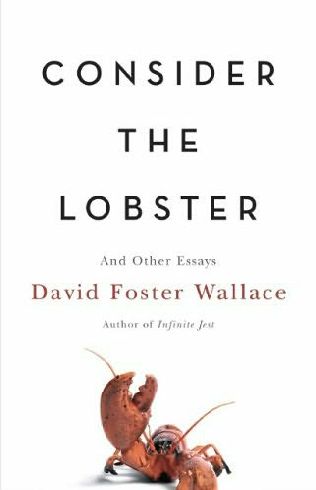
David Foster Wallace - Consider the Lobster. Just as I'm saving William Faulkner's If I Forget Thee Jerusalem and The Mansion to read when I'm older, having burned through most the rest of his works in my formative years, I feel I should now be reading DFW only sparingly. The essays in Consider the Lobster kind of came on like a weekend spent with a lost friend -- you forgive the excesses and savor what was so fantastic and fresh about the writing. "Authority and American Usage" illustrates in a way that nobody else likely could the connections between clear writing, critical thinking, and democracy. (It almost -- almost -- makes me want to teach English Comp again, just so that I can use and explore that essay with actual English Comp students.) And "Certainly the End of Something Or Other, One Would Sort of Have To Think" pinpoints what's so insufferable about John Updike. It's sad and shocking to think that Wallace (9/12/08) beat Updike (1/27/09) to Dead White Male status.

Another reason to ration what DFW works I've not yet read:1 his style of merging hyper-precise language with the whole inarticulate, ultra-casual, abbreviated jargon thing is super infectious w/r/t one's one writing. (Also a stylistic problem that comes from reading Faulkner.)

1 : Oblivion: Stories, Everything and More: A Compact History of Infinity, the upcoming and unfinished Pale King.
------

Jack Pendarvis - Awesome. I picked this up straight from the 21st Century literature shelves (ie, I wasn't particularly looking for it or utilizing Dewey Decimals) based on its colorful kid's-booky binding and because Pendarvis is a friend of my local bookstore and folks I like who've worked there. It much improved three or four lunch hours spent in the otherwise and miserable space that pretends to be this university's cafeteria in the summer months.

Awesome concerns a giant (named "Awesome," which I say in place of "the titular giant," which would be twee) who's particularly skilled in building robots. You can take it from there. As Samuel Jackson said of the film titled Snakes On a Plane, "You either want to see that or you don't."

Awesome reads like a novelization of the world's weirdest 64-bit SuperNintendo cartridge, and I mean that in the most complimentary way. The plot involves a quest for improbable items, its dialogue marries the erudite with the down-home, and its general tone is fit for your more fantastical Roald Dahl or Kenneth Grahame child-lit if not for all the preoccupation with ejaculate and emasculated wieners.

------

Nelson W. Aldritch, Jr., Ed. -- George Being George. It seems to me that George Plimpton had the kind of charmed life that, again like Snakes on a Plane, you're either going to envy or abhor. He was a dilettante, which I'd always understood to be a pejorative until thinking about Plimpton's life as presented here. To do a little bit of everything -- pitch for the Tigers, narrate a Ken Burns documentary, run an influential literary magazine, serve as Commissioner of Fireworks for New York City, host swank parties in your west side apartment, write a few respected books, wrestle a gun out of the hands of an assassin -- seems like the best of all possible modern lives. Luckily, Plimpton had the right kind of ancestral and social-economic background to be able to gain entry to this kind of life, and if you stand back a bit he seems like the perfect poster child for White Privilege, but at least he was polite and humble and good-humored about it all. It's hard not to like the guy, in biography as in life, apparently. (Sadly, no direct mention is made of George's commercials for Intellivision.)

This is an oral biography, assembled in the manner in which Plimpton assembled similar works on Edie Sedgwick and Truman Capote. It strikes me as the perfect kind of biography for Plimpton, both because it accentuates his proclivity for anecdotes and society life, but also because the format allows the editors to cut out all the boring stuff. It's fun, fast, and only a touch gossipy. The 50's Paris and 60's New York the book evokes seem really sort of magical, the kind of places were wandering into a coffee shop at exactly the right time might lead you to a career of editing fiction for a literary magazine. The kind of places where a third glass of scotch might either lead you into a month-long, continent-spanning practical joke or a wrestling match with Norman Mailer.

I've been made aware that the last book I reviewed does not make for good beach reading, as a lengthy description of decapitation can really melt the ice in your Mai Tai. This book, however, really demands to be read on vacation, as far as possible from your actual and ordinary life. You're not going to want to break away from the bit about Plimpton dodging bulls with Hemingway in Madrid in order to switch your whites from the washer to the dryer, which -- lets face it -- is likely one of the more significant things you've done with yourself today.

5.10.2010

Way Down In The Hole

It's been a while since I focused on books here, largely because I'd promised myself that I wouldn't write about books I hadn't finished reading, and I haven't finished much lately. Instead, I've been reading in the fashion of Russian nesting dolls, creating a Choose-Your-Own Cloud-Atlas of my own drifting attentions. A surreal detective novel led me into a Seattle steampunk novel, which skipped into a wickedly thick Victorian suspense novel, all of which wen on hold for a true crime book about a post-Katrina New Orleans murder.

I was led to Ethan Brown's Shake the Devil Off by way of David Simon's new HBO show, Treme, or more specifically the New Orleans Times-Picayune's blogged annotations for Nawlins outsiders. Speculations on two of Treme's characters in comments for recent weeks suggested that they may be based on the victim and perpetrator of a grizzly New Orleans murder-suicide, the subject of Brown's book.

In October of 2006, Zackery Bowen killed himself by jumping off the roof of the Omni hotel in New Orleans. In his pocket was a note directing police back to his apartment, which held the dead and dismembered body of his girlfriend, Addie Hall. Brown tracks Bowen's story from days as an MP in Iraq and as a Katrina hold out in New Orleans through a tempestuous relationship with the presumably bi-polar Hall, and has -- authorially, at least -- a lot of sympathy for Bowen. Brown makes it pretty clear that the war and the military had done Bowen wrong, and makes clear his sense of Bowen's murder/suicide as part of a post-traumattic stress-related psychic break.

It's an interesting book and a quick read, though the murder scene is a particularly grizzly one that is recounted at three separate times throughout the book. Brown makes an attempt to extrapolate past his subject to take a longer view on post-Katrina crime in New Orleans and on Iraq- and Afghanistan-related PTSD. The book is blurbed by several of the writers of Treme, who clearly have utilized some of Brown's theses regarding New Orleans crime and post-Katrina malaise in the early going of the series. Strangely, The Wire and other late, lamented HBO series (John From Cincinnati, how I wish you'd lasted) factor into the narrative in particular ways. As a further spot of synergy, Treme's theme song was written and performed by John Boutte, who lived in the same apartment complex as Bowen and Hall at the time of their murder, and factors as a witness in Brown's book

------

Speaking of Treme, it is so nice to have David Simon back on television. Treme has all of the tropes of The Wire in play -- the city beseiged by crime and failing social institutions, the principled characters threatened by their own powerlessness, a willingness to explore issues of race and class. In addition, the New Orleans setting allows attention to be paid to music, cuisine, literature, and the kind of artful moments that, at times and in small ways, allow transcendance. So Treme offers -- again, in small and rare ways -- a hopefulness that was mostly absent from The Wire.

David Simon's piety, by which I mean his interest in educating his viewers about his sense of justice or morality or the gap between the way the world works and the way it ought to, is at least as fiercely felt in Treme as it was in The Wire. In the second episode, well-meaning but niave post-Katrina volunteers -- and we know they are niave because they say they are "from Wisconsin" -- are disparaged by certain characters for not knowing the "real" New Orleans, because all they know of New Orleans is the French Quarter, "When the Saints Go Marching In," and television footage of the flooded 9th Ward. Before long, this kind of in-group/out-group attitude may well become insufferable.

Similarly, Treme's willingness to spend five or so minutes away from its narrative to gaze adoringly on some Big Easy brass band or street musician can get it the way of its dramatic momentum. The music is important to the series, clearly, but then Hemingway advised us all to kill our darlings, didn't he? Celebrity guest stars may also become a problem -- each episode so far has integrated, in various ways, your favorite alternative musicians, authors, and celebrity chefs, something that didn't happen often in The Wire (with the exception of that serie's finale, whose inclusion of Richard Belzer as Detective John Munch placed The Wire's much-lauded realism squarely within the confines of the Tommy Westphall hypothesis).

2.17.2010

Adam Raised A Cain

As I've mentioned before, I dig retold Bible stories despite being somewhat cloudy in my deism. They work somewhat in the way of cover songs, recasting the familiar in a new light, and somewhat in the way of the science fiction or fantasy tale. Those distant B.C. years are far enough gone as to be seem a completely different world. And of course the source material isn't long on the telling detail, so applying the lens of modern psychological fiction to the scant lines of Genesis can really bear fruit.

In Fallen, David Maine -- whose most recent of his four novels utilizes 1950's monster movies, not the Bible, as his source text, and therefore can't be said to be a one-trick pony -- essentially covers the first 17 lines of Genesis chapter 4. In a stylistic approach that pays off both thematically and plotwise, Maine retells this story backwards, ala the movie Memento, progressing (or regressing) from the death of Cain to the expulsion from Eden of Adam and Eve. Further, the novel is divided into sections in which the narration hews to a particular point of view: first Cain as the exiled murderer, then Abel as the dutiful but naive brother and son, then Adam as father and provider, then Eve as tempted and temptress.

Strategically, both structural forms pay off. By moving backwards, the notion of consequence is foregrounded moreso than the notion of destiny, although Maine plays with those larger lapsarian questions as well. From a story standpoint, where only trouble is interesting, Cain is more fascinating after the murder than before it, and the banishment of Eden is going to be slightly more vital through Eve's lens, as she carries the fuller experience of temptation, so it is only right and fitting that we are tied to their point-of-view.

The backwards form also heightens the sense of an expanding world, as we watch it being built in reverse. The initial chapters touch on the construction of the city of Enoch, designed by Cain and named for his son, and populated with the people who by that time filled the earth-- a hundred and thirty-plus years into the life of Adam. The late chapters, in which Adam and Eve wander without shelter, at the mercy of the weather and wild animals, are brutal and sparse, highlighting the absence of the glories of the Garden but also echoing back to the civilization that they, through family, create. Naked but for their girdles of fig leaves, Adam and Eve need to invent the means of survival -- the spear, the fishing net, the clay brick. Maine's approach also makes foreign the first pregnancy, the first butchering of the first carnivore, all of which only carry mystery and mystique in this text because they follow after the first murder. Again, this lends a science fiction or perhaps magical realist glow to the book, in that so much of what is commonplace to us is described in ways that make it new.

As in the Preservationist, Maine handles the alien (to follow a conceit) presence of God in this story with a light touch, a presence that may or may not be material, whose ways can be neither anticipated nor understood, the ultimate in inscrutable characters.

2.08.2010

Maximum Consumption

David A. Kessler is the former commissioner of the FDA under Bush I and Clinton, and the former Dean of Yale Medical. His bipartisanship and administational experience might be what lends a dose of impartiality to The End of Overeating: Taking Control of the Insatiable American Appetite. As with books on parenting and civics, books on diet and nutrition often have something on the order of a hidden politics -- an insistance on quack science, an outlook on the nature of things that just doesn't fit with reality.

Kessler's book, though, is less a diet book than an examination of why people like me tend to overeat with the idea that, knowledge being power and all that, we can then take control over what and why we eat. Kessler suggests that much of what we eat has been designed and processed to maximize salt, sugar, and fat in a combination that creates "hyperpalatable" food. The combination of these three elements combine as a kind of information overload in the brain, creating a chemical reaction similar to bliss or elation, and as a side effect a postive association with that particular food that can lead to cravings or control issues. Further, Kessler shows that the combination of salt, sugar, and fat can lead to such powerful signals in the brain that they overpower or obscure other signals that might indicate fullness or satisfaction. In some ways, hyperpalatable food can create a situation similar to information sickness -- overindulgence leads to overindulgence, and in search of a cure we overindulge. To whatever extent obesity is genetic or environmental, Kessler suggests, it is also learned and changeable.

None of this is to say that Kessler absolves overeaters of their self-control issues and responsibility, only that restaurants, food processing companies, and marketing firms all know what sells for them. As one example, Kessler deconstructs the Snickers bar as a marvel of gastronomic engineering -- there's the salt and fat and sugar, there's crunchiness and creaminess and chewiness, and as he particularly notes, it all washes away in the swallowing, leaving no caramel on the teeth or peanut bits stuck in the molars. On top of this, of course, is the advertsing campaign that presents Snickers as if it were an energy bar, as a thing that "satisfies." (Kessler notes that most advertising campaigns for food seek to create these kinds of associations -- restaurants are happy and welcoming, the food is substantial enough to satisfy your hunger and make you happy, etc.)

Along the similar lines, Kessler shows that the food offered at fast food and chain restaurants have been pre-processed in industrial kitchens that break down and reconstitute ingredients to create dishes that are essentially pre-chewed. If you think on the foods that people tend to crave and/or overeat (cheesy pizza, the Oreo cookie, ice cream, nachos, whatever), there's surprisingly little actual work required by the jaw -- we can essentially eat as fast as we can swallow. Kessler argues that both this food, and its marketing, needs to be regulated.

There's probably not a lot that's new in The End of Overeating, scientifically or dietetically, but its assembled in neat and bite-sized portions, and the writing is both plain and accessible -- fully half of its pages are small-print end notes. Like the self-help and diet books that you'll likely find this book hiding among, it can be read in the better part of one evening. Unlike them, its clear and rational and sensible and, let's hope, helpful.

2.05.2010

Thirteen Steps Lead Down

When I was living in Massachusetts, I would spend Saturday mornings listening to NPR and writing (or, perhaps more likely, avoiding writing). WBUR in Boston had a terrific Saturday morning line-up of Scott Simon's Weekend Edition, followed by Wait Wait... Don't Tell Me! with Peter Sagal, then Car Talk and This American Life. Some days I would listen straight through to Prairie Home Companion, which WBUR seems not to carry any longer, and a homegrown show featuring puns and language play from host Richard Lederer.

But that was the east coast around the millennium, and now it's a decade or so later and Saturday mornings consist of Max & Ruby cartoons, toy trains, and music classes for 3-year olds. I can't reliably luxuriate in Saturday morning radio anymore, and even if I could the station that carries Wait Wait... in Milwaukee doesn't come in so well. I've been trying, though, to keep up with the show through its podcast. I've always enjoyed Peter Sagal -- he speaks clearly and quickly, always sounds upbeat, and he's wickedly funny.

Sagal's Book of Vice purports on its cover to concern "very naughty things (and how to do them)," but the things he covers aren't exceedingly naughty and little information about how one goes about doing them. In his introduction, Sagal puts forward the book as a kind of rejoinder to William Bennett's Book of Virtues, but it isn't exactly that, either. Still, it's a worthwhile read.

Sagal relates his forays into the world of vice, reporting on swingers clubs, strip joints, gambling dens, porn starlets, conspicuous consumption, and -- why not? -- molecular gastronomy. In each instance, Sagal represents a pleasant way of standing on his "staid, Midwestern" morals without being at all judgemental. He's curious about these things, but not particularly salacious or scandalized by them.

Sagal's wit, so evident in the radio show, doesn't always translate that well to the page, though it's a light and fun read. He's bored at the Saturday night swinger's party, he's mystified by contemporary pornography, he astutely demonstrates that the appeal of gambling is not in the winning. Ultimately, as his final anecdote demonstrates, it's the wondering about all this stuff, not the stuff itself, that he finds satisfying. So although Sagal claims in his introduction that "Somewhere, somebody is having more fun than you," he demonstrates conclusively that this isn't actually the case.

1.20.2010

A Lot Of MCs Like To Use The Word Dramatical

Logicomix, a graphic novel that comes from a group of folks in Greece, constitutes the origin story of the great superhero known to modern readers as Bertrand Russell.

Russell's origin story is a blatant rip-off of the Batman story. While still a small child, Russell's parents are killed by stoicism and Victorian prudence, causing Russell to take up the mantel of logic to combat the evils of warrantless argument and unproven math problems. And just like Batman, Russell takes a pacifist view towards the first world war and falls in love with a co-worker's wife.

In all seriousness, Logicomix is a neat little book that -- through the combined use of pictures and text, a genre known to many as "comics" -- offers up not just the life story of Bertrand Russell (who lived a much more interesting and action-packed life than one might expect) but also an examination of the link between philosophers/mathematicians and madness, all as part of a kind of history of western philosophic thought in the years circa 1880-1950. With a glossary and illustrated examples of some pretty high-concept ideas, it would make for an interesting text for a high school or college-level philosophy course. Except that there's sex and murder in it, too.

------

Asterios Polyp is a graphic novel by David Mazzucchelli, who had previously illustrated Daredevil and Batman comics written by Frank Miller, as well as an excellent comics adaptation of Paul Auster's City of Glass. And while there are plenty of graphic novels out there that are really just fatter comic books, this work -- perhaps second to Chris Ware -- works much the way good novels do.

The title character, a former academic architect of Greek descent, is explored in his present, in which he is somewhat driftless and full of loss, and the past that explains how he got that way. Certain sections we explore alongside Asterios, while the flashback sequences -- as such -- are narrated by a twin brother, dead at birth but continuing to lead a kind of shadowed life alongside him. The intertwining of these two timelines and the two Asterios (present and past) is meticulously constructed, such that elements echo back and forth through the story. A common item -- a wristwatch or an army knife -- might first seem to be a detail meant to add texture to an illustration, but later may be revealed as an important hinge to the story. This all adds up to a level of emotional and psychological depth that few would expect from comics work (even though, okay?, such things are pretty common to the form).

As in Logicomix, concepts of architecture, sculpture, music, and dance are wound into the story itself, in ways that allows this text to both teach you and expect you to be familiar with the concepts it explores.

My library didn't totally get that Asterios Polyps' dust jacket is smaller than the book itself, but your bookstore or library may differ.

1.05.2010

I Know I'm Unloveable, You Don't Have To Tell Me

I haven't written about books in a while, because I have decided not to discuss (here) books that I haven't finished reading, and I've been abandoning books lately. But here are some thoughts on two books I read over the holidays:

Jonathan Lethem is on the verge of becoming an actual disappointment artist. I skipped his last novel, You Don't Love Me Yet, despite it having a title borrowed from a pretty awesome Roky Erikson song, because it was a book about a band and books about fictional rock musicians are never good. Chronic City, a book I'd really been looking forward to since reading a excerpt masquerading as a short story in the New Yorker last year (and, really, enough with that, New Yorker), is also -- I'm terribly sad to say -- not good.

Generally, I'm an easy reader. I like almost everything. so long as it is free of vampires or hypocritical internal ethics and icky perspectives on transracial adoption. I really loved, and continue to love, Lethem's Fortress of Solitude. For all its messiness, it captures something about friendship, about urban life, about being a teenager, about the sound a pink Spalding ball made when it twokked off the front stoop, about alienation, about "Play That Funky Music, White Boy," about the ways in which pop culture both fires and limits the imagination. I'm not sure, at this vantage point, what Chronic City captures. There's a chapter in which four characters wait for photos to load on eBay through a dial-up connection.

As Janet Burroway said, only trouble is interesting. Chronic City's central character, Chase Insteadman, is an attractive and well-funded former child actor who attends swanky Manhattan parties. Not much trouble, there. A sub-plot involving Chase's astronaut girlfriend, does present some trouble -- there are Chinese mines separating her from earth, she's running out of oxygen, and is diagnosed with cancer -- but this whole matter is pretty well erased by Lethem by the novel's end. Other troubles -- some of them kind of neatly magical, including a gray fog that has encased lower Manhattan and a giant tiger that is destroying buildings along Second Avenue -- are dealt with in similar fashion. In fact, almost at every turn, Lethem lowers the stakes for the narrative, including a pretty winkingly metafictional suggestion that, hey, none of this real anyway.

Kind of sad.

------

Zadie Smith's Changing My Mind kind of rescued me from post-Chronic City malaise; I picked it up almost immediately after finishing the last sentence in Lethem. Smith is wicked smart, as the Bostonians say, but the essays are mostly accessible. There's one on Italian opera that I had to skip, and another one on Nabokov vis a vis Roland Barthe that I had just enough grad school theory courses to absorb. She also managed to sell me on E.M. Forester, whom I was previously sure I was never going to read.

She also draws a pretty fantastic connection between Eliza Doolittle and Barack Obama, and reviews the summer movies of 2006. A short essay on the 2006 Oscars falls short for me -- Smith attempts to write her piece without naming any celebrities, but this seems to reinforce the unearned exclusivity and privilege enjoyed by celebrities rather than subvert it. That is, Smith seems more star-smitten in her attempt to work around the sort of gossip magazine fascination we have with stars, as if her press pass into Fight Club has convinced her not to talk about Fight Club.

An essay on "realism" in the novel serves as an late, measured response to James Wood's charge of "hysterical realism" in reviewing Smith's novel White Teeth. (For the early, measured response see here.)

The last part of the book consists of a 40+ page close reading of David Foster Wallace's "Brief Interviews with Hideous Men," and the resulting essay is probably the best elegy for Wallace I've seen. Smith's explications of DFW's stories demonstrate his humanity and brilliance, while not ignoring how at-times-insufferable DFW's work can be.

8.29.2009

Papa Was A Rodeo

At Aaron's recommendation, I read Home Game, a short book on fatherhood by Michael Lewis, author of Moneyball. It's a very quick read, the kind of book that will shorten a longish bus ride or a mild bout of insomnia. It's funny and wise, and Lewis makes us for being a parent with more financial resources than you by being self-effacing and admitting mistakes. He's probably not quite as oafish a parent as he makes himself out to be. There is one paragraph, however, that glitters with gold flakes of truth and which I would happily tattoo on my back if only it were about 500 words shorter:
At some point in the last few decades, the American male sat down at the negotiating table with the American female and -- let us be frank -- got fleeced. The agreement he signed foisted all sorts of new parental responsibilities on him and gave him nothing of what he might have expected in return. Not the greater love of his wife, who was now encouraged to view him as an unreliable employee. Not the special love from his child, who, no matter how many times he fed and changed and wiped and walked her, would always prefer her mother in a pinch. Not the admiration of the body politic, who pushed him into signing the deal. Women may smile at a man pushing a baby stroller, but it is with the gentle condescension of a high officer of an army toward a village that surrendered without a fight. Men just look away in shame. And so the American father now finds himself in roughly the same position as Gorbachev after the fall of the Berlin Wall. Having shocked the world by doing the decent thing and ceding power without bloodshed for the sake of principle, he is viewed mainly with disdain. The world looks at him schlepping and fetching and sagging and moaning beneath his new burdens and thinks: OH...YOU...POOR...BASTARD.

I would hope that I could nod appreciatively towards the sentiment above without much in the way of hedges or caveats, without explaining that I really do love my wife and kids, and am often glad to pitch in the minority share of parenting, and so on and so on. Most of Home Game is not so much the above as it is sort of the normal anecdotes of fatherhood, the kind you hear in those occasions when you get to hang around with other parents and actually talk instead of having to be the Wimperative Dad ( "Caleb, do you think you want a hot dog or would you eat a grilled cheese sandwich?"). The book's humor makes it worthwhile, and the mother of Lewis' children happens to be Tabitha Soren, who you will remember from your days watching MTV as a randy teenager.

8.23.2009

I Should Be Drinking A Toast To Absent Friends

I am drawn back, without entirely being sure of the reason, to books about the folk music revival of the late 50's and early 60's, and to books about comedy in the late 60's and 70's. I do find it interesting that these movements overlapped, with many nascent stand-up comedians working the same clubs that -- just years before -- spawned Dylan and Baez and that crowd. Perhaps it's the notion of the performer as an artist, someone honing a craft and daring to put it out in front of the public.

In any case, Richard Zoglin's Comedy At The Edge, explores the realm of stand-up comedy post-Lenny Bruce and up through Seinfeld. George Carlin and Richard Pryor are the two real ground-breaking figures in this time frame, although Zoglin makes a convincing case for the long-term influence of Robert Klein's smart and confessional stand-up. It's an interesting book, particularly when Zonglin examines comedians like Klein or Elayne Boosler or early James Brooks. Others, like Steve Martin or Andy Kaufman or Robin Williams are well-covered in other books, but Zoglin interestingly considers not just those performers themselves but how they fit in (or didn't fit in) with their contemporaries. Zoglin does a good job on focusing only on what's interesting, completely skipping over some popular 70's comedians of no real influence or acclaim (David Brenner or Rich Little, for example, are barely mentioned). Also, while some comics are followed into the 80's and beyond, it seems right that Zoglin would focus his book on the decade just before the explosion of cable television, the expansion of comedy clubs outside New York and L.A., the post-Cosby Show surge of sit-coms helmed by unseasoned stand-up performers, and other catalysts for the over-saturation and late-century decline of the medium.

------

Dan Ariely's Predictably Irrational was not the book I was looking for. I was hoping to read something that might attempt to explain why we humans seem to so often act in ways counter to our own best interests, a kind of What's The Matter With Kansas? of the soul. Predictably Irrational was not that book. Instead, Ariely -- a behavioral economist at MIT -- examines the ways we make decisions, with a focus towards consumer decision making. (While not aimed thusly within the book, his experiment and conclusions all seem to be ready-made for corporate Marketing departments. It seems that, like the academic realm of psychology, this relatively new field of behavioral economics will become the proving ground and testing lab for advertisers and salesmen.) Ariely finds, for example, that most people will take a free piece of average-quality chocolate even if they have the opportunity to buy a better chocolate for a small price, that we're less likely to cheat on tests if we're reminded of the Ten Commandments beforehand, that we can be moved by hidden persuaders to think a magazine subscription deal is better than it is, and so on. It's kind of Freakonomics-lite, and the cover's no damn good, and I found myself resenting that it wasn't the book I wanted to read, if even such a book is out there.

------

I've also continued on through Betrand Russell's History of Western Philosophy. After the fun chapter on the ancient Greek crackpot and math genius Pythagorus, there are several short chapters on other Ionians who aren't nearly as interesting. They argue whether matter is always in a state of flux, or whether anything actually changes, and there are some early stabs at atomic theory, but it's clear through these chapters that we are really just bidding our time while waiting for Socrates and Plato to come along.

Russell is a bit concerned that all these early philosophers are essentially rich kids who have the time for teaching and contemplation, which is sort of what both Socrates and Plato were. Socrates was put to death by the Athenians essentially for corrupting the youth and being a godless and "curious" person. Consider his persecutors as the House Un-Athenian Committee. Socrates defended himself unsuccessfully and HUAC ordered his punishment as death. Under Athenian law, Socrates had the right to propose a counter-offer regarding his punishment. Socrates suggested that HUAC fine him thirty bucks. So, yeah, they killed him pretty good.

Russell shows the influence of Sparta on Plato, Socrates' student. Where the Athenian city-state was groovy and like art, the Spartans took over stuff and fought the Persians and starred in Frank Miller graphic novels. But they also practiced eugenics and allowed little personal property and were the sort of society that the folks at Congressional Town Halls are pretending America's going to be under Obama's health plans. Plato's Republic, then, essentially proposes a merger of Athenian politics and culture with Sparta's communal focus in a form that, as Russell -- writing from England in 1940 or so -- presents it, is basically forms the blueprint for Nazi Germany. Fascinating stuff.

8.13.2009

Triangle Man Hates Particle Man

As I've said before, I'm a Unitarian, and from that we can expect that I don't know much about philosophy, theology, or ancient history. In an attempt to rectify that, and as challenged by a bearded Michigander, I'm undertaking Bertrand Russell's History of Western Philosophy, a 916 page small-print volume from 1945. My copy comes from the Golda Meir Library at the University of Wisconsin-Milwaukee, where I found it wedged under a water cooler (or "bubbler") on the basement level to prevent water from leaking out onto the indoor/outdoor carpeting and thereby creating both a mildewy smell and squishy footfalls 'round the old foosball table.

Here's what I've learned from the first 50 pages:

"Science tells us what we can know, but what we can know is little, and if we forget how much we cannot know we become insensitive to many things of very great importance. Theology, on the other hand, induces a dogmatic belief that we have knowledge where in fact we have ignorance, and by doing so generates a kind of impertinent insolence towards the universe" (11). Almost all of what Russell says about the dangers of -- or I suppose I should say "excesses of" -- theology bring the presidency of G.W.B. directly to mind.

To teach how to live without certainty, and yet without being paralysed by hesitation, is perhaps the chief thing that philosophy, in our age, can do for those who study it" (11). This is essentially what Camus and other more optimistic (relatively speaking) existentialists were saying about a decade later. Those Frenchies stole from us!

Social cohesion is a necessity, and mankind has never yet succeeded in enforcing cohesion by merely rational arguments. Every community is exposed to two opposite dangers; ossification through too much discipline and reverence for tradition, on the one hand; on the other hand, dissolution, or subjection to foreign conquest, through the growth of individualism and personal independence that makes co-operation impossible" (20). So all these jackasses that are yelling at congressmen because health care for poor people will somehow make them less free are totally leading us to dissolution or subjection to foreign conquest. I say we ossificate the bastards.

Book One, Part One, Chapter One ("The Rise of Greek Civilization") makes it clear that the early Greeks essentially stole their culture from Egyptians, the Babylonians, and the Cretans.

I'm interested by Russell's use of the works of Homer to explicate the Greek pantheon of gods. The Iliad and the Odyssey (which date from 560 to 527 BC) "represent the point of view of a civilized aristocracy, which ignores as plebeian various superstitions that are still rampant among the populace" (28). And then: "It must be admitted that religion, in Homer, is not very religious. The gods are completely human, differing from men only in being immortal and possessed of superhuman powers. Morally, there is nothing to be said for them, and it is difficult to see how they can have inspired much awe." (29) Russell quotes from Gilbert Murray's Five Stages of Greek Religion: "The gods of most nations claim to have created the world. The Olympians make no such claim. The most they ever did was to conquer it... Why should they do honest work? They find it easier to live on the revenues and blast with thunderbolts the people who do not pay. They are conquering chieftains, royal buccaneers" (30). So, again, Dick Cheney = Hephaestus.

The civilized man is distinguished from the savage mainly by prudence, or, to use a slightly wider term, forethought. He is willing to endure present pains for the sake of future pleasures, even if the future pleasures are rather distant. This habit began to be important with the rise of agriculture; no animal and no savage would work in the spring in order to have food next winter... Hunting requires no forethought, because it is pleasureable; but tilling the soil is labour, and cannot be done from spontaneous impulse" (33).

Russell makes the case for the influence of the worshippers of Dionysus and Orpheus on modern thought: "Much of what is greatest in human achievement involves some element of intoxication, some sweeping away of prudence by passion" (34).

"We know more or less what an educated Greek learnt from his father, but we know very little of what, in his earliest years, he learnt from his mother, who was, to a great extent, shut out from the civilization in which the men took delight" (40). Someone is probably already on this, but I think it would be interesting to read a History of Household Knowlege, a book that would chart the more domestic aspects of the development of mankind. How did the Greeks approach child-rearing? How did germ theory affect household chores? When was the couch invented?

Aniximander -- "the second philosopher of the Milesian school," mid-500's BC -- argued that "there was an eternal motion" between the elements of fire, earth, and water, "in the course of which was brought about the origin of the worlds. The worlds were not created ... but evolved. There was evolution also in the animal kingdom. Living creatures arose from the moist element as it was evaporated by the sun. Man, like every other animal, was descended from fishes. He must be derived from animals ... because, owing to his long infancy, he could not have survived, originally, as he is now" (45). Then, 2300 years later, Mr. Charles Darwin.

Aniximander is supposedly our first map-maker, and he held that earth is shaped like a cylinder. You have to love these early arguements about the shape of the earth. "No, sir, it is like unto a coffee table." "Certainly not. Our world has the form of an inverted sandal."

On Pythagoras, ca. 532 BC: "Some say he was the son of a substantial citizen named Mnesarchos, others that he was the son of the god Apollo; I leave the reader take his choice between these alternatives" (48). And, later: "He may be described, briefly, as a combination of Einstein and [Mary Baker] Eddy. He founded a religion, of which the main tenets were the transmigration of souls and the sinfulness of eating beans" (50). The religion, for a time, "acquired control of the Senate and established a rule of the saints. But the unregenerate hankered after beans, and sooner or later rebelled." Turns out that Bertie Russell's a funny, funny man. And kinda looks like Sid Caesar, doesn't he?

1.07.2009

You Won't Fool The Children Of The Revoution

I know, I know: more books.

But baby, it's cold outside. And nothing's on television.

I'm going to proclaim that The Astonishing Life of Octavian Nothing, Traitor to the Nation, Vol. 1: The Pox Party is the Best Book I've Read This Year. (I recognize that this would have more weight had I so proclaimed a week or so distant, but one can't help but address circumstances as they are.)

In fact, Octavian Nothing is in the running for Best Book I've Read This Decade. It's so good that I'm having a lot of trouble figuring out how to communicate how good it is, because a lot of what I'll say about it below runs the risk of suggesting that this book is not, in fact, worth the time and money that it is so totally worth. I'll limit myself to ten points:

1. Octavian is a slave in late 18th century Boston, with the relationship between the American Colonies and their British rulers intensifying towards the eventual Revolution. He is indentured to philosophers who utilize Octavian as a test subject, to see whether "Homo Africanus" can be civilized in the manner of classical European education.

2. Though nominally a "slave," Octavian has a pretty cush life amid the opening chapters. Things get worse, in the manner of an adventure story or a Dickens novel, and yet as things get worse for Octavian, he learns more about himself, his own biography, and his lot in the world. Which means that you become increasingly invested in the story.

3. The book is largely narrated by Octavian in authoritative and neatly archaic 18th-Century American English, supported here and there by historical (but still, you know, fictional) documentation.

4. Somewhere after the mid-point of the novel -- a point that follows keen and alarming depictions of discrimination and torture (or what W. might call "Advanced Subjugation Techniques") -- something so devastating occurs to our narrator that he stops narrating his own book. And this is not done in a meta-textual Robert Coover/John Barth game-playing fashion, but seriously: your main character turns his back on his own story.

5. For a time, then, Octavian's story has to be taken up by someone else, and he appears for a while as an ancillary character in letters to home from a citizen-soldier in the burgeoning Revolutionary War. These letters are pitched perfectly into the florid and sentimental style common to American soldiers of the 18th and 19th centuries.

6. The writing, throughout, crackles with intelligence and a command of the era.

7. When you finish Vol. I, you'll want to have Vol. II on hand, which has just been released in hardcover. (In fact, it was a review of Vol. II in the New York Times Book Review that led me to discover Vol. I.)

8. You'll find both volumes in the "Young Adult" section of your local independently-owned bookstore. I'm not sure why this is a Young Adult book, as it as mature in its themes and concerns as any Old Adult book I've come across. I suspect it's marketed as YA because its author's previous books were YA, but this is about as far from Goosebumps and Judy Blume as I can imagine. (And the dated references to YA books of an earlier era should suggest to you my current ignorance of the genre. Perhaps descriptions of British Loyalists being tarred-and-feathered are common to those bookshelves nowadays, and perhaps I skipped the scenes in Harry Potter that deal with festering smallpox sores and the systematic debasement of human chattel.) In any event, the idea that this fantastic book is supposedly meant to be an adventure book for 8th graders makes it all the more astonishingly awesome.

9. If anything, upon reflection, strikes me as decidedly counter to the sort of literary fiction intended for old adults in this Young Adult book, it is the emergence of clear heroes. The villains, as one would expect in old adult books, are mostly complex -- they are villainous by aspect or intent. There is no Voldemort, only a backwards and immoral practice upheld by learned white men too eager for profit to recognize it's repugnance.

10. As Dr. Godsave once said to me about David Mitchell's Cloud Atlas, you really should read this book so that you'll be the sort of person who has read The Astonishing Life of Octavian Nothing.